ISO 9001
CE Certified
Make In India
Technical Specifications
| Measurement Principle | The physical effect the thermometer uses, such as thermal expansion (liquid-in-glass, bimetallic strip), electrical resistance (thermistors, RTDs), or infrared radiation (non-contact thermometers). |
| Temperature Range | The minimum and maximum temperatures the device can measure. For instance, a medical thermometer might range from 35°C to 42°C, while a laboratory thermometer might range from -10°C to 110°C or much wider in industrial uses. |
| Accuracy | The maximum permissible error, or how close the reading is to the true temperature. Medical digital thermometers typically have an accuracy of about ±0.1°C to ±0.2°C, while industrial platinum resistance thermometers can be even more accurate (e.g., ±0.01°C). |
| Resolution | The smallest change in temperature the thermometer can detect and display, often 0.1°C or better for digital models. |
| Response Time | How quickly the thermometer can reach thermal equilibrium and provide a stable reading. Infrared thermometers provide readings in seconds, whereas traditional liquid-in-glass thermometers can take several minutes. |
| Units of Measure | The scale used for readings, most commonly Celsius (°C), Fahrenheit (°F), or Kelvin (K). |
| Display Type | Whether the reading is analog (a scale marked on a tube or dial) or digital (an LCD screen). |
| Power Source | Whether it requires batteries (digital, infrared) or no external power (liquid-in-glass, bimetallic). |
| Environmental Conditions | The recommended operating and storage conditions, including ambient temperature and humidity ranges. |
| Durability and Features | Additional factors like water resistance, a protective casing, memory functions (data logging), fever indicators, and automatic shut-off. |
Similar Products
View all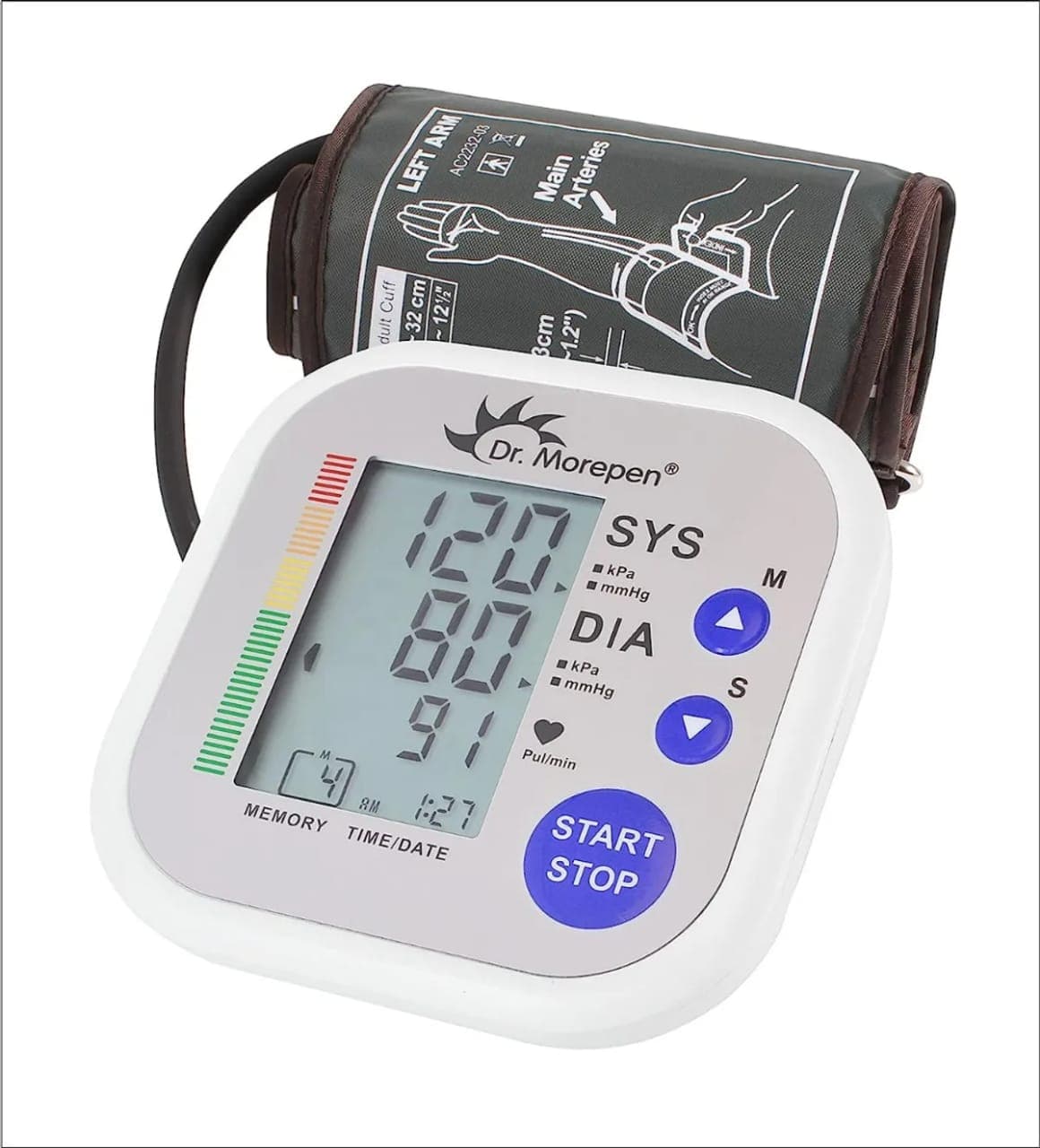
BP MONITOR DIGITAL
Sphygmomanometer: The formal medical name for the BP monitor., Inflatable Cuff: Wraps around the arm...
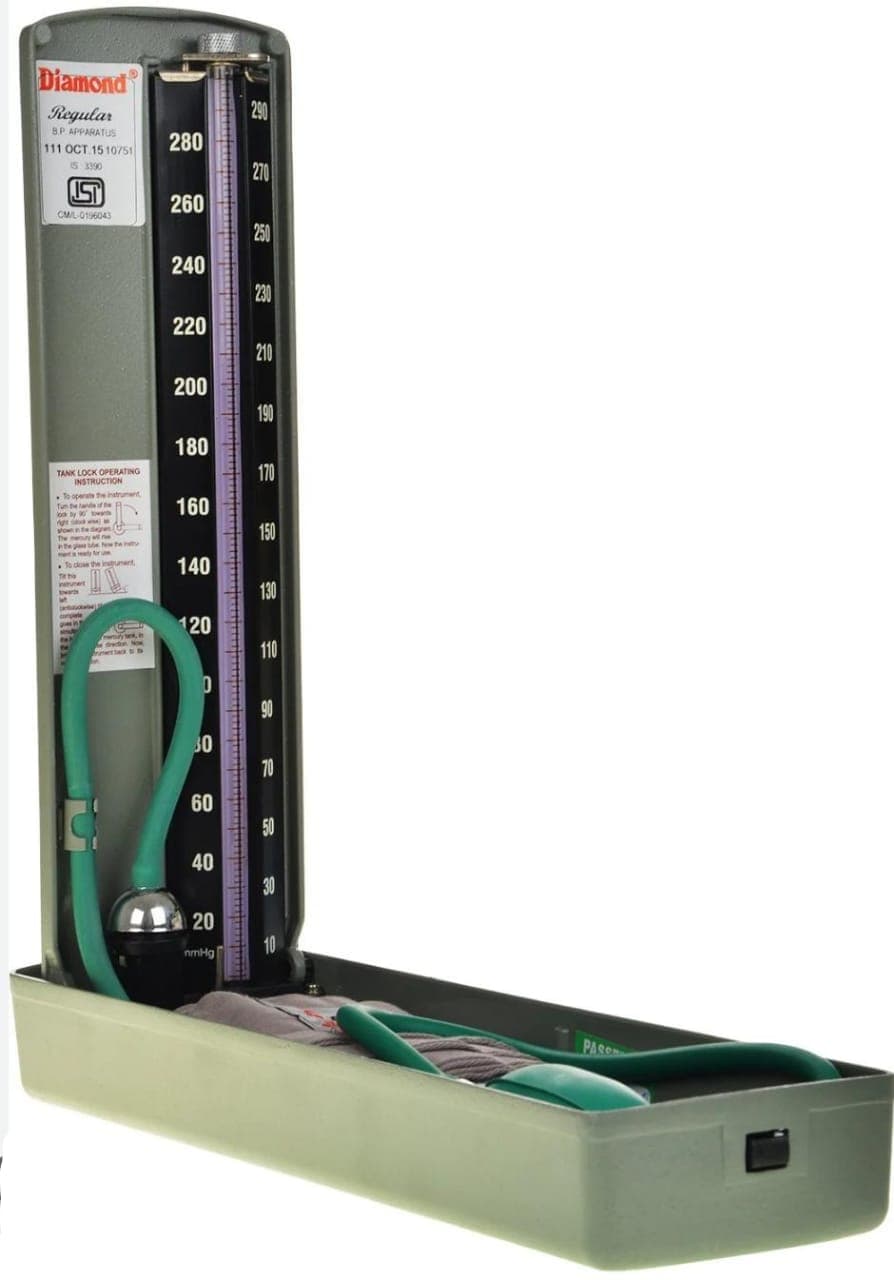
BP APPARATUS
Medical Terms for Apparatus Components A manual sphygmomanometer typically includes the following pa...
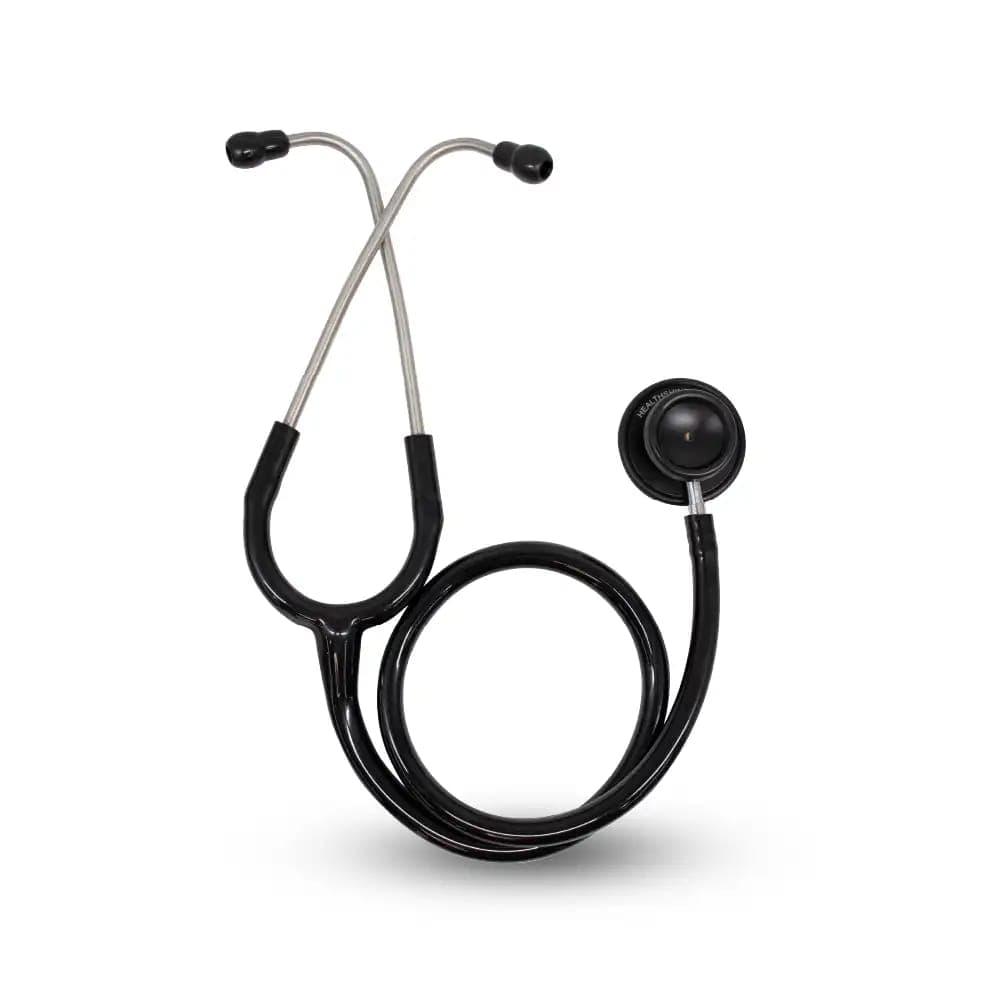
STETHOSCOPE
Frequency Range: Stethoscopes are optimized to capture specific frequencies relevant to body sounds....