ISO 9001
CE Certified
Make In India
Monitoring & Life Support
VENTILATOR MACHINE
A ventilator is a medical device that provides mechanical ventilation by moving breathable air into and out of the lungs to deliver breaths to a pa...
Key Highlights
- Parameter DescriptionTypical Range (Adult)Ventilation ModeThe strategy used to deliver breaths (e.g., Volume-Controlled, Pressure-Controlled, SIMV, CPAP).Varies by clinical need
- Respiratory Rate (RR)The number of breaths delivered per minute.10-60 breaths/min (minimum)
- Key System Components and Features
Features
- Parameter DescriptionTypical Range (Adult)Ventilation ModeThe strategy used to deliver breaths (e.g., Volume-Controlled, Pressure-Controlled, SIMV, CPAP).Varies by clinical need
- Respiratory Rate (RR)The number of breaths delivered per minute.10-60 breaths/min (minimum)
- Key System Components and Features
Technical Specifications
| Ventilation Mode | The strategy used to deliver breaths (e.g., Volume-Controlled, Pressure-Controlled, SIMV, CPAP). |
| Tidal Volume | The volume of air delivered with each breath.4-8 mL/kg of ideal body weight |
| Respiratory Rate (RR) | The number of breaths delivered per minute |
| FiO2 | Fraction of Inspired Oxygen (oxygen concentration in the air mixture). |
| Peak Inspiratory Pressure (PIP) | Maximum pressure reached during inspiration. |
| Positive End | Expiratory Pressure (PEEP):Airway pressure maintained at the end of exhalation to keep alveoli open. |
| I | E Ratio:The ratio of the duration of inspiration to the duration of expiration. |
| Inspiratory Flow Rate | The speed at which the tidal volume is delivered. |
| Air and Oxygen Supplies | Ventilators use internal turbines or connections to external high-pressure oxygen and air sources (typically >35 psi) to mix and deliver breathable gas. |
| Breathing Circuit | A set of tubes (often double-limb) connecting the machine to the patient, featuring an exhalation valve and bacterial/viral filters. |
| Humidification System | An integrated or external heated humidifier adds moisture and warmth to the air to prevent airway inflammation and keep the patient comfortable. |
| Monitoring and Alarms. | Built-in sensors and a display screen track vital parameters (pressure, volume, flow, FiO2) with audible and visual alarms for critical events like power failure, circuit disconnection, or high/low pressure to ensure patient safety. |
| Power Supply | The device typically runs on AC power but must have an integrated rechargeable battery backup (usually at least 1 hour) for continuous operation during transport or power outages. |
| User Interface | A display (often touchscreen) shows real-time waveforms (pressure, volume, flow) and status indicators, allowing clinicians to adjust settings accurately. |
Similar Products
View all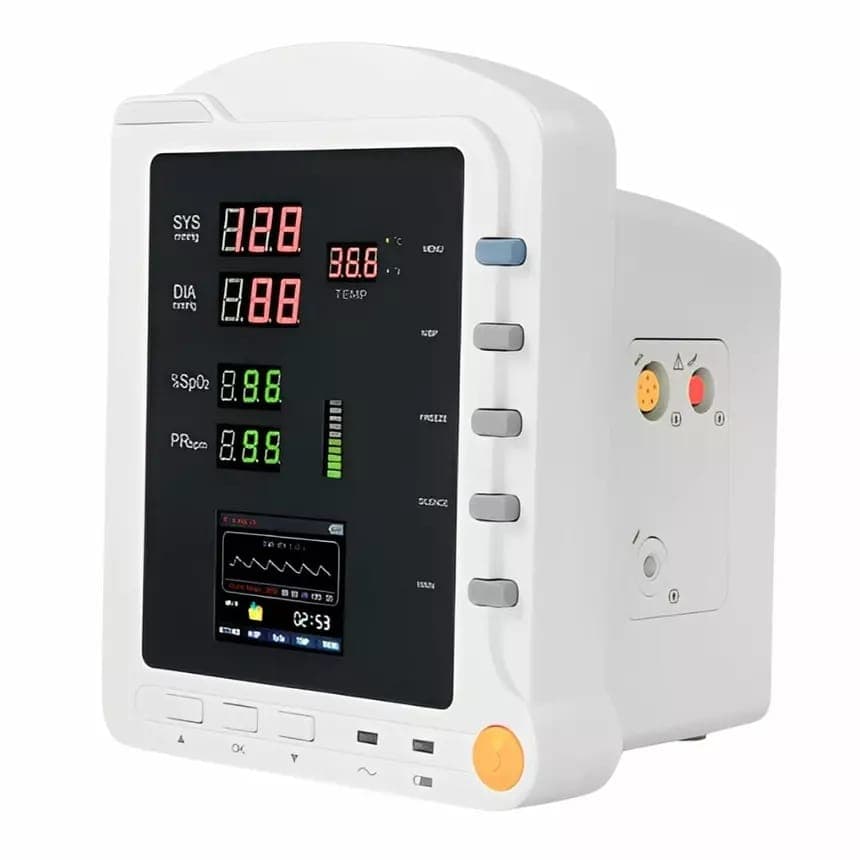
PATIENT MONITOR 3 PARA
A 3: Para monitor tracks core vital signs: ECG (heart rhythm), SpO2 (blood oxygen), and NIBP (non-in...
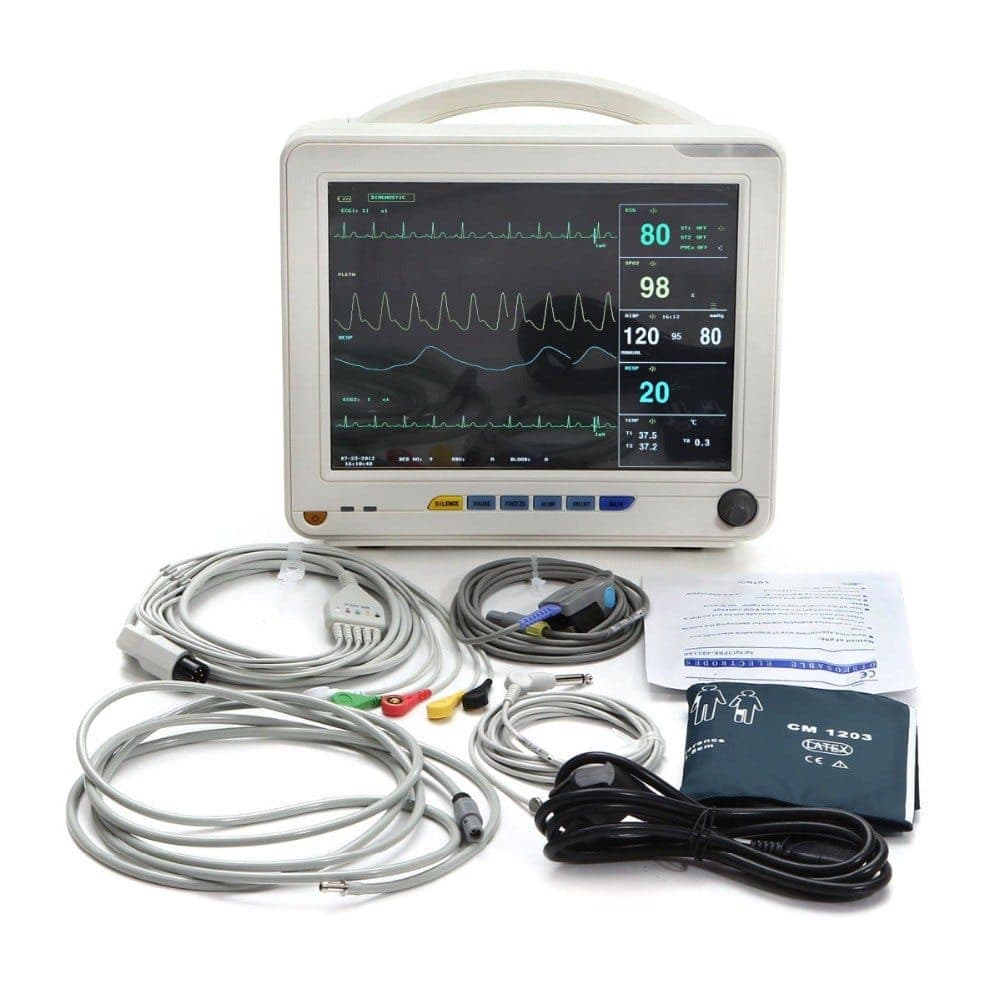
PATIENT MONITOR 5 PARA
A 5: Para Patient Monitor tracks 5 vital signs (ECG, SpO2, NIBP, Resp, Temp) on a color TFT screen (...
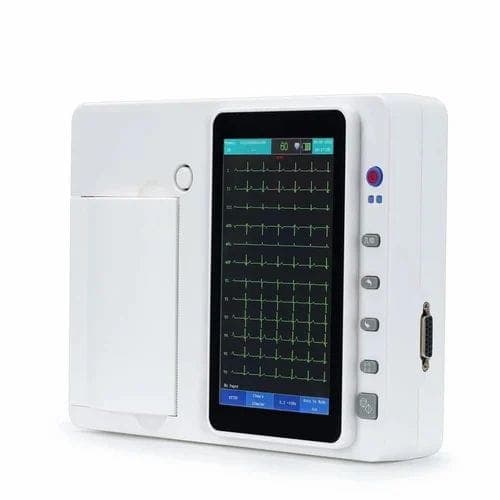
ECG MACHINE
Electrodes & Leads: Uses 10 electrodes on limbs and chest, creating 12 different "views" (leads) of ...