ISO 9001
CE Certified
Make In India
NICU (Baby Care)
PHOTOTHERAPY MACHINE
Phototherapy is a medical treatment that uses specific wavelengths of natural or artificial light to treat conditions such as neonatal jaundice, sk...
Key Highlights
- Irradiance should be measured regularly with a calibrated radiometer as lamp output decreases over time.
Features
- Irradiance should be measured regularly with a calibrated radiometer as lamp output decreases over time.
Technical Specifications
| Wavelength | The specific light spectrum used is critical for efficacy. |
| Neonatal Jaundice | Optimal effect is in the blue-to-green range (~460–490 nm). |
| UVB | Broad-band (290–320 nm) or more commonly, narrow-band (NB-UVB: 311–313 nm). |
| UVA | (320–400 nm), often used with psoralen medication (PUVA). |
| Irradiance/Intensity | The dose of light delivered per unit area. |
| Standard Phototherapy (Neonatal) | 8–10 µW/cm²/nm. |
| Intensive Phototherapy (Neonatal) | At least 30 µW/cm²/nm over the 460–490 nm waveband. |
| Distance to Patient | The distance impacts the intensity (inverse square law applies, though more complex in reality). For neonatal care, lights are positioned as close as safely possible to maximize effect, typically 10–30 cm away. Halogen lights require specific manufacturer-recommended distances to prevent burns due to heat emission. |
| Exposed Surface Area | Maximizing the area of skin exposed increases effectiveness. Techniques like using fiber-optic blankets or multiple overhead units (double/triple phototherapy) achieve higher exposure. |
| Light Source Type | Common sources include fluorescent tubes, halogen lamps, and LEDs. LEDs are increasingly recommended for their energy efficiency, longer life, and lower heat output, which reduces the risk of overheating and dehydration in infants. |
| Safety Features | Phototherapy units should include filters to prevent harmful UVC radiation, safety mechanisms to prevent overheating, timers for controlled dosage, and essential accessories like protective eye covers for patients |
Similar Products
View all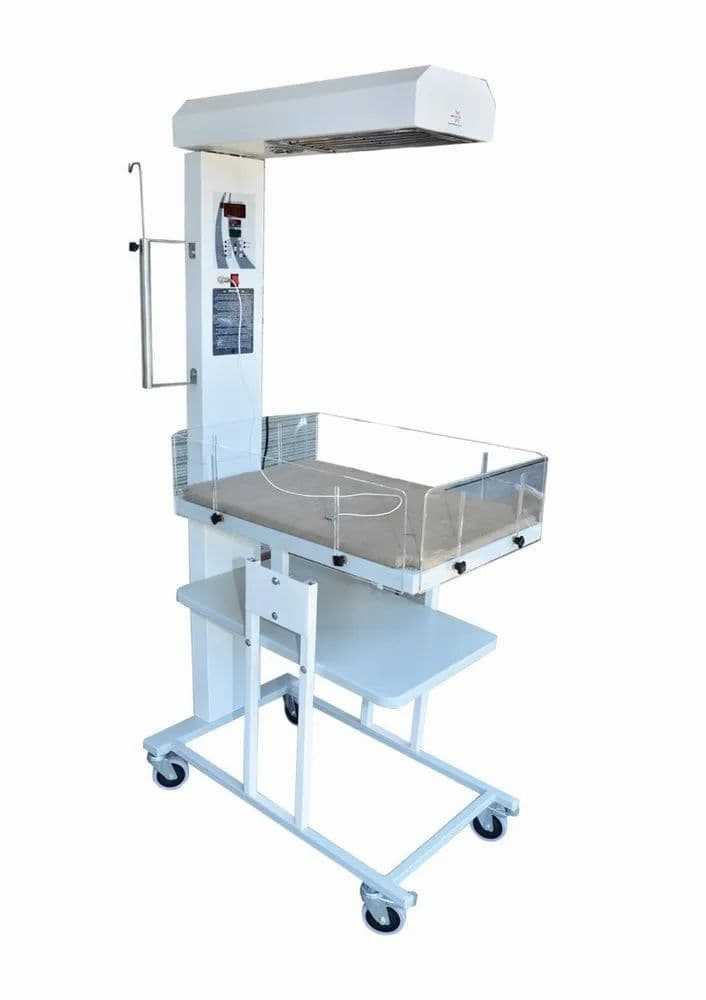
RADIANT BABY WARMER
Baby warmer (Infant Radiant Warmer) is a medical device providing controlled overhead infrared heat ...
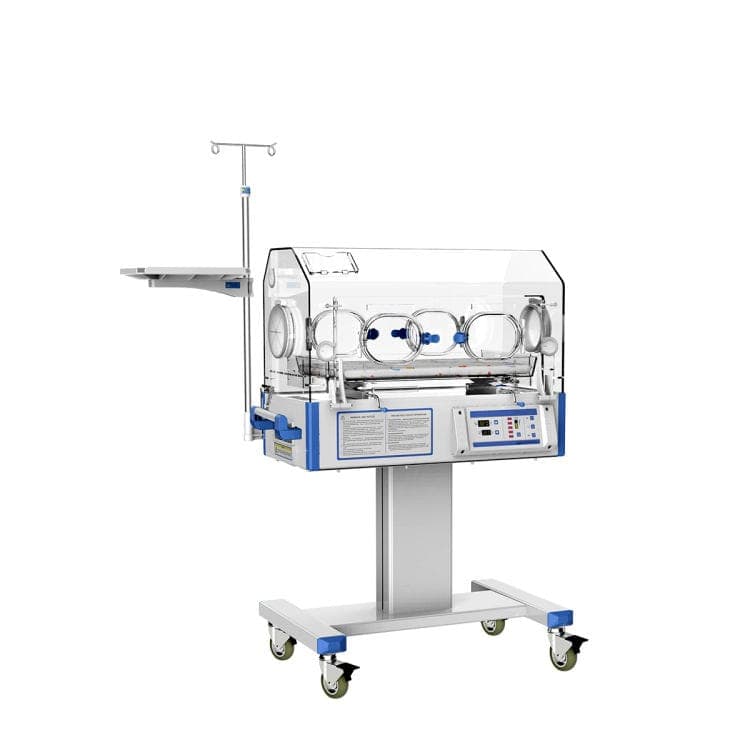
BABY INCUBATOR
A baby incubator is a medical device that provides a controlled, enclosed environment to maintain op...
BABY CRADLE
A baby cradle is a small, specialized bed for an infant, often designed with a rocking or swinging m...